EV Charger Grants in the Netherlands 2026: Municipal Schemes
By EV Charger Directory Editorial Team
Independent EV charging research desk
Our editors research grants, hardware and installation practice across the UK, Germany and the Netherlands. We don't sell chargers or take installer commissions — the guides are funded by advertising, so the advice stays independent.
Updated: 27 June 2026
Let's reset expectations straight away: in 2026 there is no national pot you, as a private resident, can tap for a home charger in the Netherlands. No Dutch equivalent of Germany's KfW, no fixed amount per charging point. If you've found an English-language page promising a "national Dutch charger subsidy," it's either out of date or confusing it with the subsidy for buying an electric car.
That sounds bleak, but it isn't in practice. The support sits at the municipal (gemeente) level, and a lot happens there — from a contribution toward installation to a kerbside charger placed on request. You just need to know which door to knock on, which is harder when you've recently arrived.
Clearing up SEPP first
Much of the confusion comes from SEPP (Subsidieregeling Emissieloze Personenauto's). The key point: that scheme was about buying an electric car, not the charger. Its budget ran dry quickly in recent years and the scheme has been wound down. So don't count on it as a charging solution for 2026, and verify the current status on rijksoverheid.nl or with the RVO before basing plans on a car subsidy.
In short: for the charger itself, look to your gemeente.
Gemeenten: where the real support is
Dutch municipalities tackle charging in roughly two ways, and it's worth knowing which applies to you:
- A subsidy toward installation. Some gemeenten contribute to the cost of a charge point on your own property — a flat amount or a share of the bill, often tied to conditions such as a minimum power rating or a certified installer.
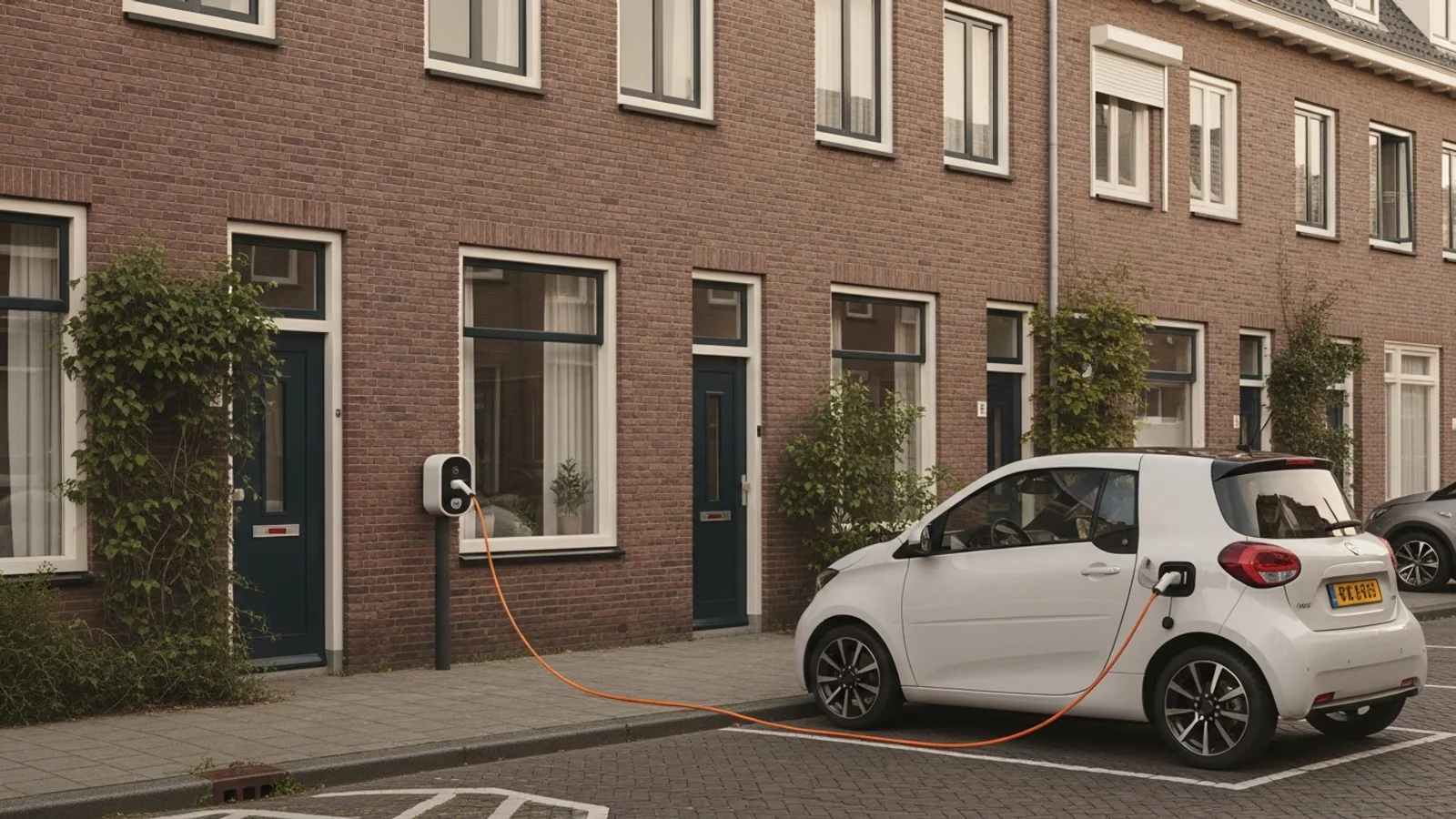
- A public charger on request. No driveway? Many municipalities let you request a public laadpaal in your street. You don't pay for it; the gemeente and a concession holder install and run it. You charge using a card, often at a local tariff.
Which option exists varies enormously by gemeente. Big cities usually have a smooth request process for kerbside chargers; smaller municipalities lean more on installation subsidies, or offer nothing yet. Because amounts and conditions change yearly, we deliberately avoid quoting fixed euro figures — check your own gemeente's website.
Requesting a kerbside charger
For residents without off-street parking this is often the best route. It runs roughly like this:
- Check eligibility: you usually need to own or lease an EV and have no charging option on your own property.
- Apply through your gemeente's portal or its designated concession holder.
- The municipality decides the location — not necessarily right outside your door, but within walking distance.
- Expect a lead time of several months; placement and cabling take time.
The upside: you pay no installation costs. The downside: you share the charger with neighbours and don't choose the spot.
The netbeheerder for heavier connections
For a standard 11 kW charger on an existing connection, you'll arrange little yourself. But if you want more power or a connection upgrade (verzwaring), your netbeheerder enters the picture — Liander, Stedin or Enexis, depending on your region. An upgrade costs money and, given current grid congestion, can carry a real waiting time. Raise it with your installer early, because it can shift both the schedule and the budget.
The levels at a glance
| Level | What it offers | Typical condition | Where to check |
|---|---|---|---|
| National | no private charger subsidy | n/a | rijksoverheid.nl / RVO |
| Gemeente (install) | contribution to a charge point on your land | certified installer | gemeente website |
| Gemeente (street) | public charger on request | no off-street parking | gemeente portal |
| Netbeheerder | connection upgrade | for higher power | Liander/Stedin/Enexis |
How to play it smart
Always start with your own gemeente: search its name plus "laadpaal subsidie" or "laadpaal aanvragen." If you have a driveway, check whether an installation subsidy is running and apply before you order — as with most schemes, retroactive approvals are rare. If you park on the street, the public-charger request is almost always the cheapest path.
And pick an installer who knows the local rules: the type B RCD requirements, the right group in the meterkast and, where needed, the conversation with the netbeheerder. Our directory lists only certified installers by region, so you can be sure your install meets the conditions a municipal subsidy or insurer expects.
Frequently asked questions
- Is there a national EV charger subsidy in the Netherlands in 2026?
- No. There is no national scheme that subsidises a home charger for private residents. Support sits at the municipal level: some gemeenten fund installation, while others place a public kerbside charger on request.
- Is SEPP a subsidy for EV chargers?
- No. SEPP covered buying an electric passenger car, not the charger. Its budget ran out quickly in recent years and the scheme has been wound down. Confirm the current status with the RVO before relying on this car subsidy for any charging plans.
- How do I request a kerbside charger from my municipality?
- Usually through your gemeente's portal or its designated concession holder. You typically need to own or lease an EV and have no off-street parking. The municipality decides the location within walking distance, and the lead time is often several months.
- When do I need to involve the grid operator?
- For a standard 11 kW charger on an existing connection, usually not. If you want more power or a connection upgrade, your netbeheerder (Liander, Stedin or Enexis) gets involved. That costs money and, due to grid congestion, can carry a waiting time.
- Should I apply for the municipal subsidy before or after installation?
- Almost always before. Most municipal schemes do not approve anything retroactively. Check whether a scheme is running, apply for it, and only have the charger installed once you have approval.