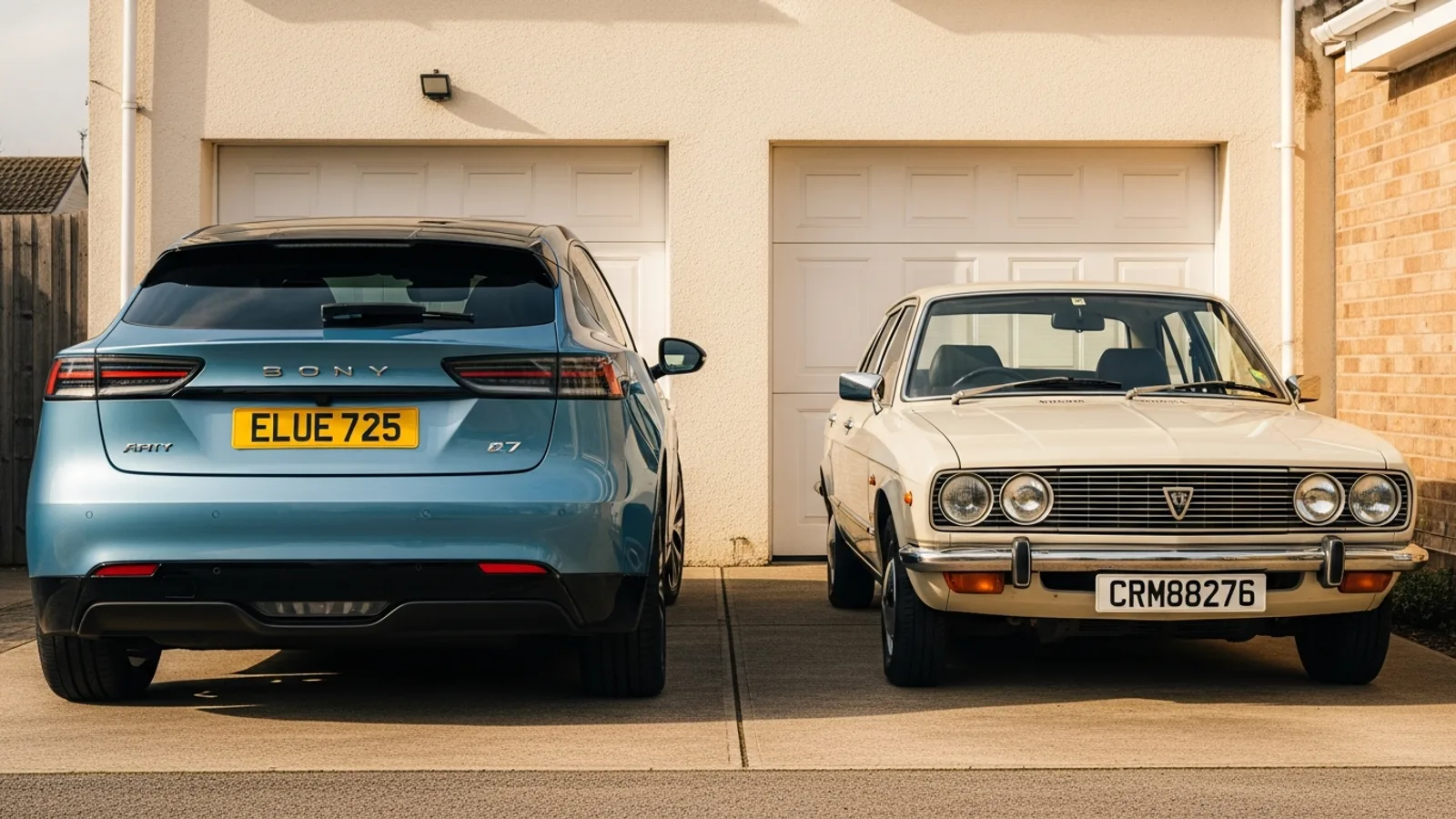
EV vs Petrol and Diesel: The Real Cost of Ownership
By EV Charger Directory Editorial Team
Independent EV charging research desk
Our editors research grants, hardware and installation practice across the UK, Germany and the Netherlands. We don't sell chargers or take installer commissions — the guides are funded by advertising, so the advice stays independent.
Updated: 27 June 2026
Two drivers, same 10,000 miles a year, same five years. One runs a petrol hatchback, the other the electric version of broadly the same car. At the showroom the EV cost more. Five years on, who is actually better off? That is the only question worth asking — and the answer hinges on four numbers people rarely add up together.
Fuel versus electricity — the gap that does the heavy lifting
This is where an EV claws back its higher sticker price, and the size of the gap depends almost entirely on where you charge.
Charge at home overnight on a cheap off-peak rate and the running cost can drop to 2–4p per mile. Charge on a standard daytime tariff and it is closer to 7–9p. Rely on public rapid chargers and you might pay 15–20p per mile — at which point the savings over petrol shrink dramatically. Petrol and diesel, by comparison, sit fairly stubbornly around 13–18p per mile whatever you do.
The lesson is blunt: an EV is cheapest for people who can plug in at home and charge while they sleep. If you live in a flat with no off-street parking and rely on rapid chargers, the fuel advantage is real but far smaller than the headlines suggest.
Servicing and maintenance
An electric motor has a fraction of the moving parts of a combustion engine. No oil changes, no timing belts, no exhaust, no clutch, fewer things to wear out. Regenerative braking even spares the brake pads.
In practice, EV owners report servicing bills that run roughly 30–40% lower than the equivalent petrol or diesel car over the same period. Tyres still wear (instant torque and extra battery weight see to that), and you still need brake fluid and cabin filters. But the big-ticket mechanical failures that hit older combustion cars are largely absent.
Tax and company-car treatment
This is the most country-specific part of the whole comparison, and it can swing the maths hard.
- United Kingdom: company-car drivers pay Benefit-in-Kind on a fraction of the value of an EV, versus a much higher band for petrol and diesel — a saving that can run to thousands a year. Note that from April 2025 EVs no longer escape road tax (VED) entirely.
- Germany: electric company cars are taxed on 0.25% of list price per month (for cars under the price cap), against 1% for combustion — the Dienstwagen rule that makes EVs compelling for salaried drivers.
- Netherlands: bijtelling on EVs has historically been lower than on petrol cars, though the gap is being narrowed year by year, so check the current rate before signing.
For a private buyer paying cash, these perks matter less — but if a car comes through your employer, they can dwarf every other line in the table.
Depreciation — the wildcard
For years, fast-falling used EV values quietly undid the fuel savings. That has settled. As the used market has matured, depreciation on mainstream EVs now looks broadly comparable to petrol equivalents, and strong models hold value well. Still, it remains the least predictable number here. Battery health, brand, and how quickly newer models arrive all move it, so treat any depreciation figure as an estimate rather than a promise.
Five-year picture, side by side
| Cost area | Petrol/diesel | Electric | Who wins |
|---|---|---|---|
| Fuel / energy | 13–18p per mile | 2–9p home, 15–20p rapid | EV (if home-charged) |
| Servicing | Baseline | ~30–40% lower | EV |
| Tax / company car | Higher band | Much lower | EV |
| Depreciation | Predictable | Now broadly comparable | Roughly level |
| Purchase price | Lower | Higher upfront | Petrol/diesel |
Add it up and the pattern is consistent: the EV usually starts behind on price and ends ahead on total cost — provided you can charge cheaply at home and keep the car long enough for the running-cost savings to outweigh the premium.
So which should you buy?
If you have a driveway, charge overnight, and keep cars for four years or more, an EV almost always wins the five-year total. If you do enormous motorway mileage, can't charge at home, or change cars every two years, the case narrows and a frugal diesel can still make sense.
The single biggest variable is your charging setup — which is why getting a proper home charger installed by a certified electrician is the first move for anyone serious about the savings. Our directory lists certified installers across the UK, Germany and the Netherlands who can quote for exactly that.
Frequently asked questions
- Is an EV really cheaper than petrol over five years?
- Usually yes, if you can charge at home overnight. Lower fuel, servicing and (for company cars) tax costs typically outweigh the higher purchase price over four to five years. If you rely on public rapid chargers or change cars frequently, the advantage shrinks considerably.
- How much cheaper is electricity than petrol per mile?
- Home off-peak charging can cost 2–4p per mile, versus 13–18p for petrol or diesel. On a standard daytime tariff it is around 7–9p, and on public rapid chargers 15–20p — at which point the savings over fuel become much smaller.
- Do EVs really cost less to service?
- Generally yes. With no oil changes, timing belts, clutch or exhaust, and brakes that wear slowly thanks to regenerative braking, EV servicing tends to run 30–40% lower than an equivalent combustion car. Tyres, however, can wear faster due to weight and torque.
- Has EV depreciation improved?
- Yes. After a few volatile years, used EV values have stabilised and now depreciate at rates broadly comparable to petrol equivalents, with strong models holding value well. It remains the least predictable cost, influenced by battery health and how fast newer models arrive.